Choose the sauce before the silhouette
It is tempting to begin with the most photogenic pasta shape and build a botanical dish around it. A more useful starting point is the sauce. Is it smooth or coarse, fluid or dense, delicate or assertive? Whole leaves, finely chopped herbs and a puréed green sauce behave differently. The right shape helps each element arrive in a balanced mouthful rather than leaving the vegetables at the bottom of the plate.
These are working principles, not fixed regional laws. Technique, portion size and the individual dough matter as much as a shape’s name. Thin tagliatelle and thick handmade ribbons may share a family resemblance yet need different finishing times. A restaurant menu rarely tells you every technical detail, but it can give enough information to explain why a particular combination makes sense.
A botanical pairing matrix
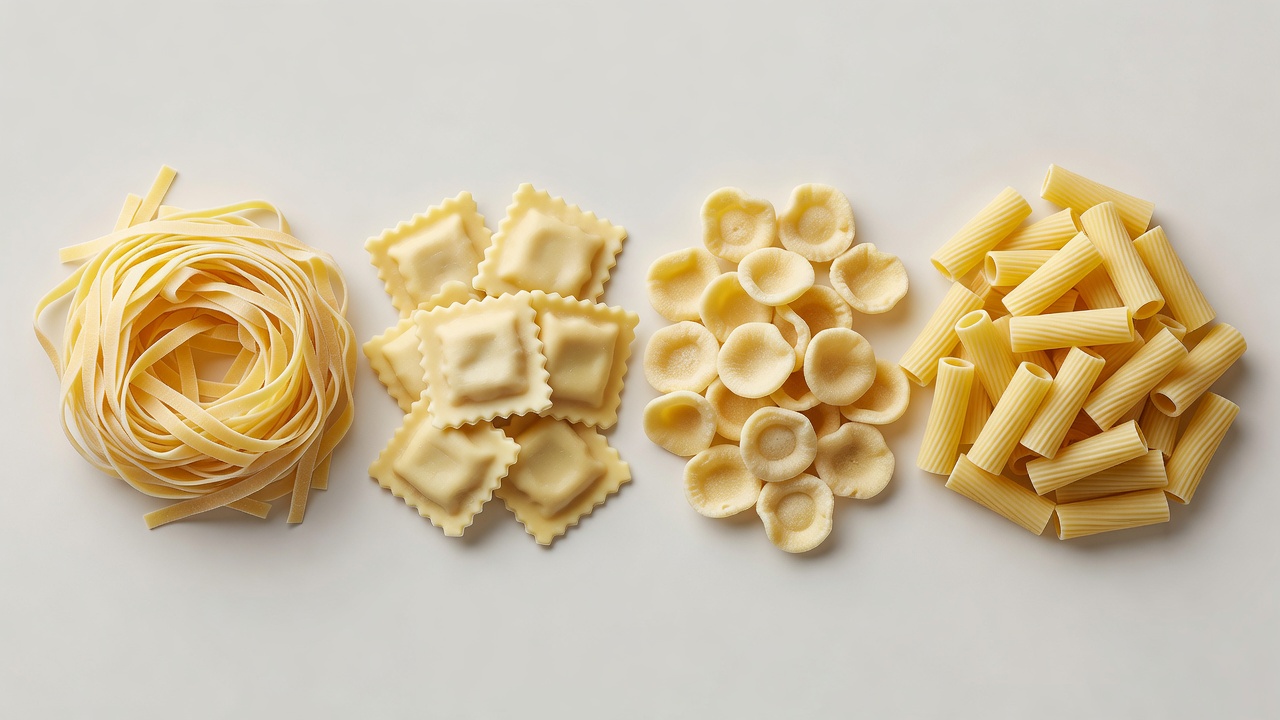
| Pasta form | Botanical direction | Sauce structure | Watch for |
|---|---|---|---|
| Tagliatelle | Parsley and lemon zest | Light, cohesive coating | Excess liquid pooling below the ribbons |
| Ravioli | Spinach filling, sage finish | Restrained butter-based sauce | A wet filling or overpowering sage |
| Orecchiette | Chopped cultivated greens | Small vegetable pieces and a light binding sauce | Leaves too large to travel with the pasta |
| Ridged tubes | Basil-led coarse herb sauce | A sauce loose enough to enter the tubes | Dense paste collecting in heavy clumps |
| Small folded pasta | Chives or tender herb finish | Clear broth or a delicate coating | Too much garnish obscuring the filling |
Ribbons make coating visible
Broad surfaces reveal whether a sauce is cohesive. A ribbon dressed with herb butter should feel coated rather than submerged. Pasta cooking water can help bring fat and liquid together during finishing, but its starchiness varies with the pasta and the cooking setup. Adding it gradually is more useful than treating a fixed amount as universal. The result should remain supple as the plate reaches the table.
Botanical ingredients change that calculation. A coarse parsley sauce introduces small particles; cooked spinach adds moisture and body; delicate basil can lose its fresh impression under prolonged heat. The herb does not always need to enter at the same moment as the sauce base. A thoughtful kitchen separates structural cooking from aromatic finishing.
Filled pasta needs a hierarchy
Ravioli and tortelli provide an interior space for greens, cheese or vegetables. That makes them well suited to a botanical idea, but it also creates opportunities for repetition. Spinach in the dough, spinach in the filling and spinach in the sauce may communicate less than one carefully prepared green element. Contrast can be more expressive: a mild filling, a restrained sauce and one distinct aromatic finish.
Moisture control is central. A loose filling can weaken the dough and blur the texture after cooking. Strong herbs inside a filling also behave differently from leaves placed on top, because their aroma becomes integrated with the other ingredients. Sage in butter is a familiar example of an assertive herb used outside the pasta to frame a gentler center.
Fresh is a method, not a ranking
Fresh pasta may use eggs, water, wheat flour, semolina or combinations of these ingredients. Dried pasta has its own valuable textures and traditions; it is not an inferior version of fresh dough. In botanical restaurant concepts, the meaningful question is whether the chosen dough suits the sauce and service. A rich egg ribbon and a firm semolina shape can express the same herb in very different ways.
Bologna and Emilia-Romagna are useful reference points for egg pasta traditions, while orecchiette connects strongly with Puglia. Marcella Hazan’s Essentials of Classic Italian Cooking offers context for understanding pasta and sauce relationships. These references should encourage attention to technique, not imply that every contemporary variation belongs to an established regional recipe.
Read the whole forkful
Judge the pairing by what a diner can actually gather. Long stems that slide away, flowers that overwhelm one bite, or chopped greens that remain behind can indicate a mismatch between presentation and eating. A well-resolved plate is legible both visually and physically. Its garnish, sauce and pasta can be enjoyed together without requiring the diner to reconstruct the dish.