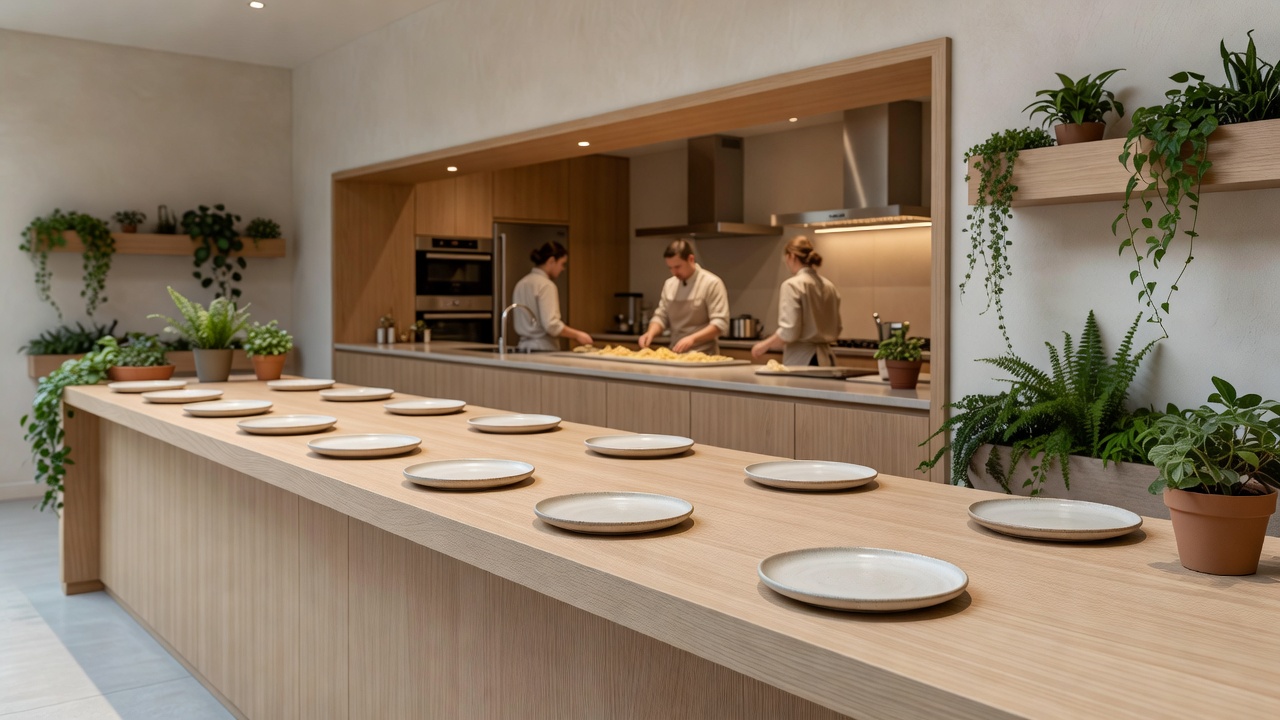
Look beyond the potted plants
Plants can make a room welcoming, but they do not explain what a kitchen cooks. A botanical pasta concept needs a culinary proposition: perhaps a compact menu built around seasonal herbs, a grower-led selection of fillings, or a counter where sauce and shape are developed together. The proposition should be understandable without relying on a wall of foliage or a long list of fashionable ingredients.
Coherence matters more than the size of the concept. A neighborhood pasta counter can express its growing relationships with a few precise menu notes. A more elaborate dining room may use a sequence of courses to compare herbs, textures and preparation methods. Neither format is inherently more serious. The better question is whether the experience delivers what its language promises.
Three ways to organize the experience
The compact pasta counter
A small selection makes shape-and-sauce decisions easy to read. Open preparation can reveal handwork, but counter seating should still allow comfortable eating, clear ordering and straightforward communication about ingredients.
The grower-led seasonal table
The menu changes around available cultivated produce. Look for named ingredients and sensible substitutions rather than an expectation that every component must come from the same garden.
The botanical tasting sequence
Several small courses can compare aroma, bitterness and texture. The progression should vary intensity and richness; repeating green purées and flower garnishes is not the same as developing a theme.
Read the menu as a set of commitments
A concise description can carry a lot of information. “Ricotta ravioli, spinach, sage butter” establishes a filling, a green ingredient and an aromatic finish. “Garden expression” establishes almost none of those things. Poetic language can be enjoyable, but it should sit beside enough practical detail to help diners choose. Prices, portion expectations and any relevant ordering format should also be clear before the meal begins.
Botanical is not a dietary category. Egg may be present in the dough, cheese in the filling, and butter in the finishing sauce. A plant-forward menu can still rely heavily on animal ingredients. Allergens may be hidden from view in pestos, crumbs and emulsions, so staff need access to reliable information rather than guessing from the appearance of the plate.
Notice the service rhythm
Fresh pasta can be sensitive to timing. A carefully finished sauce may thicken as a plate waits, and delicate herbs may wilt under prolonged heat. Good service therefore includes coordination, not just a polished explanation. A short menu can help a kitchen manage that rhythm, but it is no guarantee. Watch whether plates arrive at a sensible pace and whether staff explain sharing or sequential ordering when that affects the experience.
An open kitchen makes some work visible while leaving other work unseen. It does not by itself prove freshness, hygiene or transparency. Conversely, a closed kitchen is not evidence of secrecy. Evaluate the quality of the answers you receive, the clarity of the menu and the consistency of the food rather than treating a design feature as a certification.
Design should make dinner easier
Comfort is part of culinary design. A counter needs room for elbows, plates and conversation. A menu needs readable contrast and type. Lighting should let diners see the food, and circulation should not turn every service movement into an interruption. Accessibility includes more than an entrance: seating options, route widths and communication can all affect whether someone feels welcome.
Materials and decorative choices can suggest a botanical identity without imitating a greenhouse. A plain plate may make a leaf’s color and shape more legible than a heavily patterned surface. The strongest rooms do not require every chair, lamp and vessel to repeat the garden metaphor. They provide a calm frame for the food and the people eating it.
Use place as context, not borrowed prestige
Lyon’s Les Halles de Lyon Paul Bocuse, Paris’s Marché d’Aligre and Bologna’s Mercato delle Erbe offer different ways to observe ingredient culture. They are reference points for curiosity, not evidence that a particular restaurant buys there. Likewise, references to Liguria, Emilia-Romagna or Puglia should explain a culinary connection rather than function as decorative stamps of authenticity.
This website does not rank named restaurants or claim personal visits. Our examples describe concept types and ingredient relationships. Any actual venue’s menu, accessibility arrangements, prices and sourcing can change, so consult that venue directly before making plans. An attractive concept image is not proof that a dish is available to order.
Ask two practical questions
Before booking, start with what affects your meal: “Can you explain the current pasta choices and relevant allergens?” and “Does the seating or menu format require anything I should know in advance?” Add dietary or access requirements early. A clear, considerate response often tells you more about a dining concept than an elaborate statement about its philosophy.